RO Technology

What is Osmosis?

Understand the natural process behind reverse osmosis — and how AquTai uses it to produce pure, safe water.

The science that powers every RO system

Osmosis is a natural phenomenon found throughout nature. Reverse osmosis applies the same principle in reverse — using pressure to separate pure water from dissolved contaminants. It is one of the most effective methods for producing drinking water and process water at any scale.

Natural Osmosis

How osmosis works

Osmosis is a natural process that balances two bodies of water separated by a semipermeable membrane. Water flows through the membrane from the less concentrated side (fewer dissolved contaminants) toward the more concentrated side to restore equilibrium.

A semipermeable membrane has microscopic pores that allow water molecules to pass while blocking larger contaminants. This movement continues until both sides reach equal concentration — or until an external force changes the balance.

  • Occurs naturally in plant roots, kidneys, and cells
  • Water moves toward higher solute concentration
  • No external energy is required
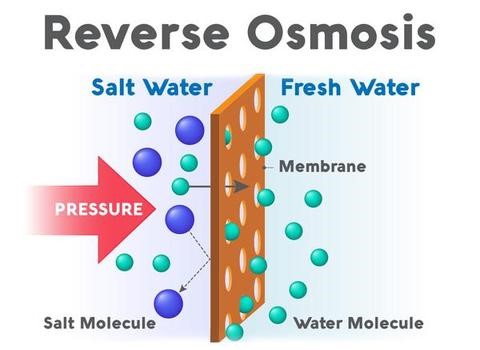
Reverse osmosis membrane diagram

Osmosis vs Reverse Osmosis

Same membrane, opposite direction

Reverse osmosis does not replace osmosis — it reverses the flow using applied pressure.

Natural Osmosis

Passive equilibrium

Water moves from a low-concentration solution toward a high-concentration solution until both sides are balanced. No pump or pressure is needed.

  • Direction: dilute → concentrated
  • Energy: none required
  • Result: concentration equalises
Reverse Osmosis

Pressure-driven separation

When pressure is applied to the concentrated side, water is forced through the membrane against its natural direction. Contaminants are left behind.

  • Direction: concentrated → dilute
  • Energy: pump pressure required
  • Result: pure permeate + brine waste

Reverse Osmosis

What is reverse osmosis?

Reverse osmosis occurs when pressure is applied to water with a high concentration of dissolved contaminants. For example, when pressure is applied to saltwater, the salt is rejected and fresh water passes through the membrane — making it suitable for drinking.

Unfiltered feed water flows to the concentrated side of the RO membrane where pressure is applied. The pressure forces water molecules through the semipermeable membrane. Because contaminants and the membrane surface carry like electrical charges, like charges repel — preventing dissolved ions and particles from crossing to the clean side.

The purified output is called permeate. The concentrated waste stream left behind is called brine or concentrate.

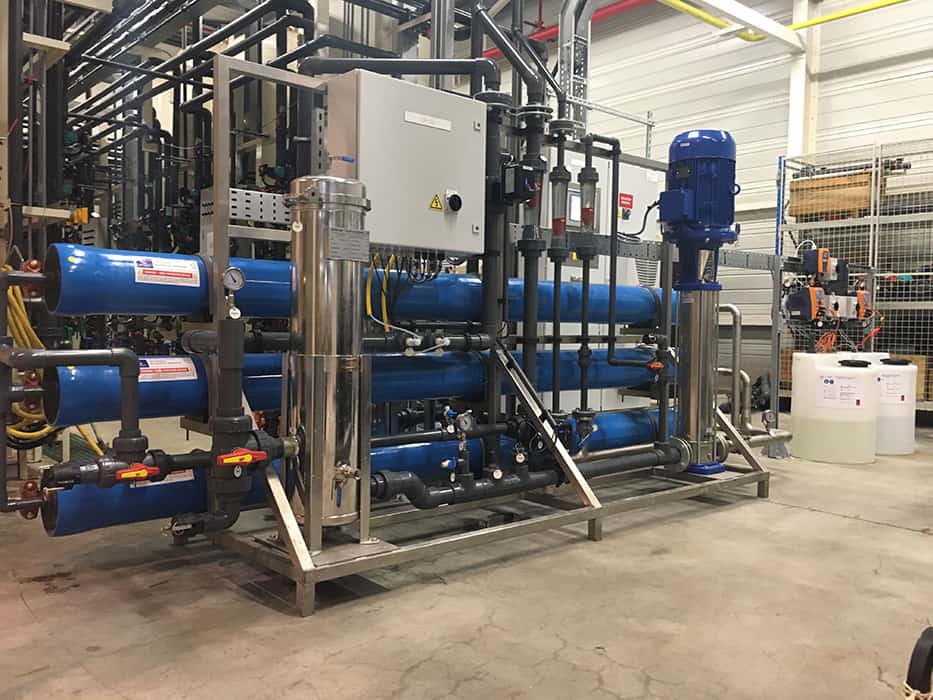
AquTai industrial reverse osmosis system

Key Terms

RO vocabulary explained

Semipermeable membrane

A thin barrier with pores small enough to pass water molecules while rejecting dissolved salts, metals, and organic contaminants.

Feed water

The unfiltered water entering the RO system — also called source water or influent.

Permeate

The purified water that passes through the membrane — the product you drink or use in your process.

Brine / concentrate

The waste stream carrying rejected contaminants, discharged to drain or further treatment.

In Practice

What happens inside an RO system

A complete AquTai reverse osmosis system uses multiple stages — not just the membrane alone.

  1. Prefiltration — sediment and carbon filters remove chlorine, particles, and tastes that could damage the membrane.
  2. Membrane separation — pressurised feed water is forced through the RO membrane; contaminants are rejected.
  3. Permeate collection — purified water flows to a storage tank or direct-use outlet.
  4. Brine discharge — concentrated waste is flushed to drain, keeping the membrane clean.
  5. Post-treatment — optional mineralisation or pH adjustment polishes water before it reaches the tap.

Ready to choose an RO system?

Browse AquTai domestic, commercial, and industrial reverse osmosis products — or contact us for a tailored recommendation.